
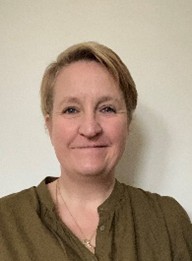
Michelle Johnson,
National Clinical Executive Director
“For me to be successful, the most important thing is to consider the ‘we’ rather than the ‘me’.”
My Personal Leadership Programme (PLP) journey began in January 2025 as part of the Executive Team cohort. From the very beginning, I experienced a mixture of excitement, enthusiasm, trepidation, and a strong willingness to learn. As the months have progressed, these feelings have only grown stronger, reinforcing my commitment to developing both myself and others as leaders.
One of my most significant reflections has been the realisation that for me to be successful, I must focus on the “we” rather than the “me.” Developing a highly effective and high-performing directorate leadership team felt critical. I knew that if we were not truly in this together, we would not achieve what we set out to do. My hope was that my leadership team would feel as energised and motivated by the PLP as I did.
Initially, my approach to collaboration was quite organic. I found myself casually asking colleagues within my directorate leadership team how they were finding the programme. With the benefit of reflection, I now recognise that I could have been far more intentional in creating structured opportunities to collaborate and learn together.
Over the first six months, collaboration was slow. We were all at very different stages of learning and confidence, which made collective momentum challenging. It was only during the winter of 2025 that I became much more deliberate in how we used the tools from the programme and how we harnessed our collective leadership to support not only the directorate but also leadership across the wider organisation.
One of the aspects I value most about the PLP is the diversity of its cohorts. Leaders range from those in their first people management roles to experienced senior leaders and executives. This diversity mirrors my own Clinical Directorate, and I have greatly valued the opportunity to have meaningful leadership conversations across my teams. These conversations have helped widen our leadership capability and capacity and, importantly, have supported leaders who have yet to begin the programme to feel included in the leadership journey rather than left behind.
Personally, I have benefited from being part of both the Executive Team cohort and a later group. This has allowed me to consolidate my learning and practise the tools and techniques that resonate most with my own leadership development.
Within my leadership team, I have come to recognise that for us to operate in the learning and high-performance zone of effective teams, drawing on the work of Amy Edmondson, there are two things I need to actively facilitate. Firstly, we need to do more together. Secondly, we need to become comfortable having some uncomfortable conversations. I am truly fortunate to work with a team that demonstrates high expectations alongside strong encouragement. This gives us the recipe for success, underpinned by our collective engagement and enthusiasm for the Personal Leadership Programme. I am confident that this will continue to grow over the next 12 months and beyond.
Reflections from My Team
The impact of the Personal Leadership Programme is already being felt across my teams.
One colleague shared how the programme has been instrumental in driving meaningful change within the team. By re-energising the practice of fierce conversations, it has created a safe and constructive space to address challenges directly. This openness has strengthened collaboration, improved transparency, and fostered a culture where issues are surfaced early and resolved collectively. Looking ahead, this approach will support stronger partnerships across the landscape, enabling co-creation, shared learning, and more effective scaling of benefit to support patients, partners, and the wider health system.
Another reflection highlighted how teams are beginning to embed PLP principles into everyday practice. Within one immediate team, a monthly “What’s Working Well” session has been introduced as part of regular huddles, creating space for reflection and feedback that includes colleagues not yet undertaking the programme. Alongside this, the introduction of the QUIPS (Quality Improvement and Patient Safety Team) Weekly RISE framework, focusing on Results, Issues, Steps, and Eureka moments, has helped teams reflect, learn, and take practical steps forward together. As it was described to me, this approach symbolises the team almost starting from scratch, with renewed clarity, curiosity, and shared purpose.
This journey has reinforced my belief that leadership development is most powerful when it is collective. The Personal Leadership Programme has not only shaped my own growth but has strengthened how we lead together and I look forward to seeing where this shared journey takes us next.