
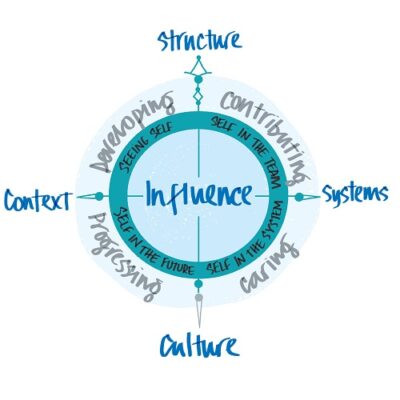
THE INFLUENCING MODULE IN 3 SENTENCES
Influence is improved through an understanding of context, systems, and culture.
Influence is a journey of discovery into finding your voice and using it well in complex environments.
Influence is an opportunity to dispel myths around position/knowledge power and how connecting to your strengths and passion can support you in widening your circle of influence.
LEARNING INTENTIONS FOR THIS MODULE
Re-convene as a learning group.
Explore the complexity of systems and how this impacts your role as a leader.
Share reflections on creating and sharing your Map of Influence and the connectivity to your Influencing Style.
UNDERPINNING THEORY
Systems Thinking: Senge et al.
Barry Oshry: Seeing Systems.
Thinking Environments: Nancy Kline.
CONTEXT
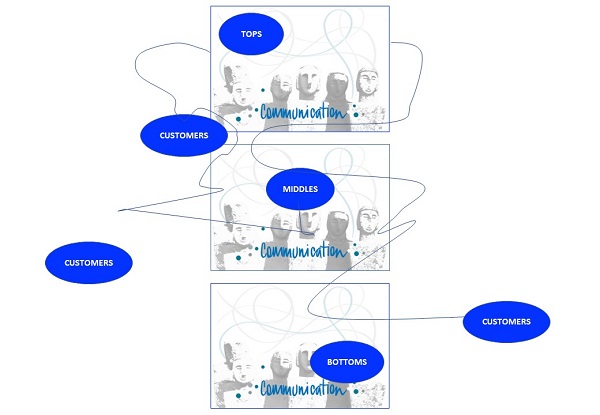
Once you have begun the journey on your own Personal Leadership Development, it’s critical that you have an awareness of two other strong influences on your behaviour and responses. The context within which the organisation functions and how that context impacts you as a leader.
In a Systems Thinking view, the work is to look at the interdependencies and the constant changing of relationships and experiences based on context. Fundamentally, we believe that we can’t untangle the system because the system itself is full of people, and people, by their human nature, are messy. The question is: ‘How do we create learning spaces that enable people to see the unseen in the system and respond in a more connected way?’
The content of this section will support you to be fully present and connect with your deeper purpose, resulting in a cycle of development and change in contrast to becoming caught in a cycle of fear and sacrifice.
Whether the system is a family, a friends group, or your organisation we often spend inordinate amounts of time and energy trying to untangle things and less time thinking about how we can be effective in the complexity.
Hear Fiona introduce the section
Organisational Metaphors
No one can avoid experiencing organisations. From the moment we are born until we die, our lives are governed and constrained by organisations, and almost everyone works in an organisation at some point, albeit some are very small and some very large. However, even if you operate a single-person small business, you will still be part of a larger organisational network of suppliers and customers.
Although we have this all-pervading organisational experience, not very many people think deeply about how the organisational environment of work shapes and constrains the issues peer leaders have to address. The metaphors we adopt in thinking about organisations shape the way we conceptualise the whole leadership endeavour.
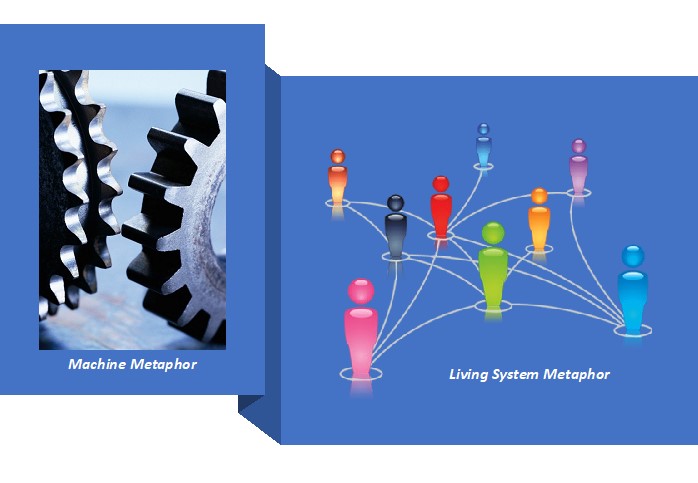
We offer the machine and living systems metaphors to you as a way of viewing the organisation and how it works. Our hope is that this allows you to think differently about organisation structure, process and the behaviour of people. We do not suggest that one is right and the other wrong. What we would like you to ponder is that the overall focus on the machine metaphor has been to the detriment of ways of being that supported civilisations for centuries before the industrial and technological revolutions.
In the wake of the industrial revolution and the beginnings of large-scale manufacturing and production perhaps this was helpful. In the complex ever shifting environment that is the world of work today, the idea of the organisation as a living system with emotions, feelings and the capacity to change, adapt and re-invent is also useful.
What happens when we don’t See the System?
Machine Metaphor
This metaphor has proved to be extremely durable and powerful in influencing our understanding of organisations and how people behave in organisational settings. The majority of peer leaders, managers and individuals, whether they realise it or not, carry this idea of an organisation into every organisational interaction. Many of the principles and underlying assumptions that accompany this metaphor appear to have penetrated every aspect of organisational belief, language and behaviour.
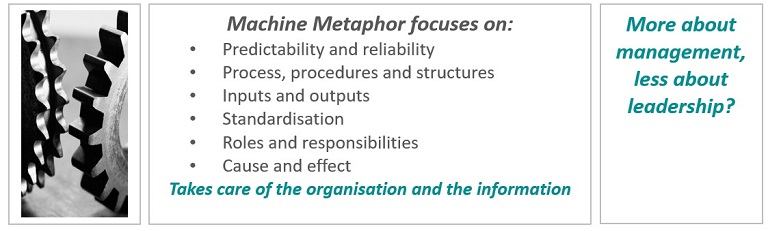
In summary:
- Process before people
- Change is associated with “breakdowns” and malfunctions and things that need to be fixed
- More focus on control and compliance than on ideas, innovation
- People are told what to do, this may well produce compliance, but can contribute to poor morale, avoidance, and absence
- Emotions and emotional displays can be seen as problematic and rarely seen as a legitimate reaction to unpleasant news, or as useful information about an aspect of the change that may have been overlooked
- There is an inherent suggestion in this way of thinking that there will be a right answer to the question, problem, or situation
Living Systems Metaphor
An organisation can be viewed as “living” in two distinct ways. Firstly, there is the idea that it is made up of people, so is, therefore, alive. Secondly, there is the idea that joining the people involved creates “the organisation”, which is therefore alive, dynamic and responsive to the environment.
It is interesting to reflect on how communities worked together prior to the industrial and technological evolutions. Whilst we accept and embrace all the good that these changes brought, we also raise the question about what was lost. The concepts of conversation, community and relationship will be a specific part of our focus around the “Living System Metaphor”.
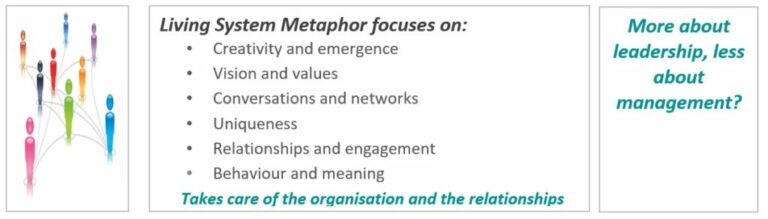
In summary:
- People before process
- Acceptance that where there are people, there will be confusion, misunderstanding, enlightenment, common cause, conflict and harmony
- More focus on strengths, appreciation and potential for growth
- Asking more, telling less
- Whatever I put my energy into grows, both positive and negative
- A belief in the power of positivity
- A belief in the power of conversations
LEADERSHIP INFLUENCE
As leaders, and as people, we all have the capacity and capability to influence others. We know from our work on TA that we have an impact all the time and that this can be both helpful and unhelpful. This section of the toolbox invites you to think about your Circle of Influence and Concern, your Influencing Style, and your current and desired Map of Influence.
This is ostensibly a ‘White Piece of Paper’ where you visually represent your current network of influence on a sheet of flipchart paper.
This should include information on connections that are important in your world and aspirations to show where you have influence and where you need to have more influence. It might be helpful to think about who is in your circle of influence and who is in your circle of concern.
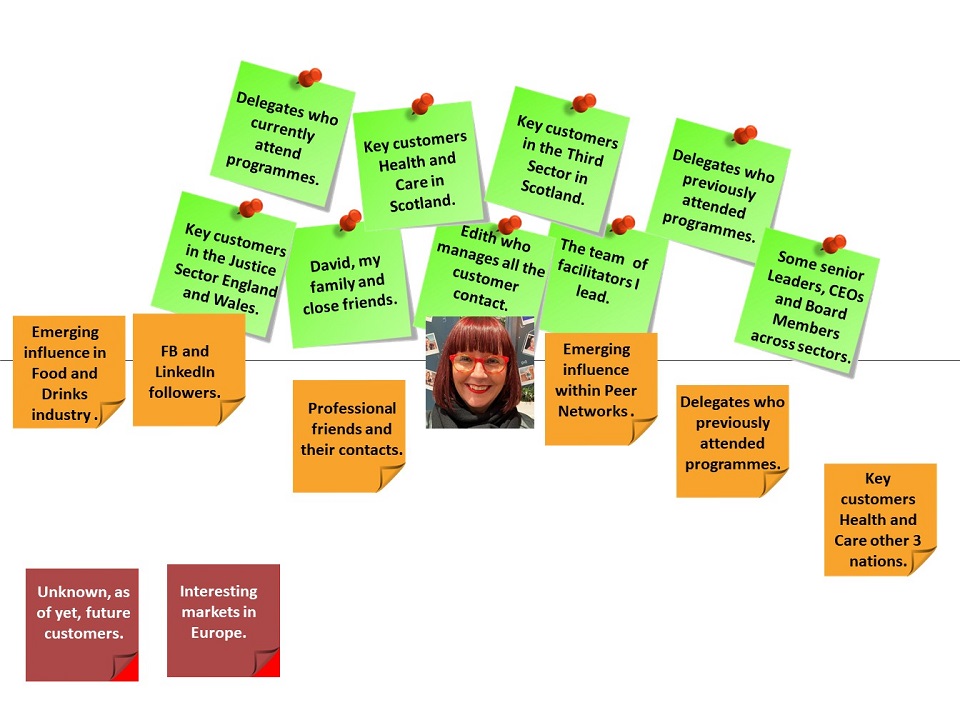
Listen to Fiona speak about her circle of influence.
Resource: Influence in the System
Circle of Influence
According to Stephen Covey, proactive people focus on issues in the circle of influence, developing positive energy and confidence by making things happen and so gradually enlarging their circle of influence. In contrast, reactive people neglect the issues that are under their control and influence and grow increasingly bitter and frustrated as their circle of influence progressively shrinks.
Discover more about the Circle of Influence by watching the video below.
Sometimes in large organisations, it’s challenging to push out beyond our current circle of influence. This may require us to feel vulnerable, needing to connect to courage and confidence within ourselves. These are not the usual kinds of things that pop up on competency frameworks, especially in the public sector. However, if we as peer leaders need to step out and up from where we are, then it seems that these ideas matter.
Listen to Brene Brown talking about these concepts.
Push Me Pull Me Questionnaire
Push is more about moving or forcing someone to change rather than motivating them to want to make the change. Push styles tend to involve the ‘stick and carrot’ approach. They can be effective in achieving compliance and possibly quick results but may not achieve commitment.
Pull is generally about motivating the individual to want to change and engage. They tend to involve personal disclosure, involvement and showing the possibilities that will result from change.
They tend to work on decreasing the forces or rationale against change. Pull styles can be effective in gaining commitment and high quality, but they may be slower in achieving results.
Resource: Push Me Pull Me
Helpful additional information
Watch this short video about the Science of Persuasion