
Paul Bebbington,
Commercial Business Partner to Supply Chain
“What’s one small thing I can do next?”
The leadership programme came at a point where I was ready — and probably needed — to stop and really reflect on how I lead. What struck me early on was that this wasn’t just about tools or models. It was about taking the time to look at my own leadership style, the impact I have on others, and the way I show up day to day. That kind of reflection isn’t something I always make space for, so having a structured opportunity to do it was incredibly valuable.
One of the most important areas for me was the focus on strengths. Instead of concentrating on what’s missing or what’s gone wrong, the programme encouraged me to recognise what I naturally bring and how I can use that more intentionally. Simply bringing those strengths to the surface had a noticeable effect on my confidence and self-awareness. It helped me reconnect with what energises me and what I have to offer, which in turn made my leadership feel more grounded and authentic.
The way the sessions were run made a big difference. They were engaging, interactive, and full of exercises that pushed me to think more deeply. A standout moment was exploring the idea of generative listening. I realised how often I’ve been inclined to jump in, interrupt, or steer conversations toward my own ideas before fully hearing someone else. When you really sit with the discipline of listening — not to respond, but to expand someone else’s thinking — you start to see how powerful that space can be. It’s simple in theory, but in practice it’s transformative. That’s been a big learning for me and something I’m actively working to embed.
Another useful lens was understanding how we communicate under pressure. Reflecting on adult-to-adult conversations and how stress can shift our behaviour gave me a clearer picture of my own patterns. It wasn’t about judgement; it was about awareness. Having that awareness creates a moment of choice — a chance to reset and respond more intentionally.
A particularly meaningful shift came from the focus on moving forward rather than dwelling on the past. I’ve spent a fair amount of time replaying difficult moments in my career, sometimes longer than is helpful. The idea of asking, “What’s one small thing I can do next?” sounds straightforward, but it’s incredibly grounding. Pairing that with journaling has helped me translate reflection into action. It keeps progress practical and rooted in the present rather than stuck in rumination.
The leadership compass exercise also stood out. Sitting down to map my strengths, challenges, and aspirations helped externalise thoughts I hadn’t fully articulated before. It made my development feel more tangible and intentional. It wasn’t just about career direction — it was about thinking more broadly about what a fulfilling working life looks like and how I can move toward that.
What makes this programme different from many others I’ve experienced is the way it draws from a range of ideas and brings them together into something practical and human. Rather than leaning heavily on a single framework, it challenges you to rethink how you approach your own growth and your impact on others. It feels less like learning a theory and more like shifting your perspective.
Letting go has been another important theme. There are things from my past that I’ve held onto longer than I needed to. Through the programme, I’ve started to understand how to release some of that weight and focus more on what’s within my control now. That process is ongoing, but it feels purposeful rather than accidental.
Having spent years in formal study and leadership development, I didn’t expect to encounter something that would genuinely move the needle. Yet this programme has helped me make real breakthroughs. It reminded me that leadership development isn’t about collecting more knowledge — it’s about integrating insight into everyday behaviour.
I come away with a stronger sense of clarity, confidence, and intention. Leadership, for me, now feels less about having the right answers and more about being present — with myself and with others. That’s a shift I expect will continue to shape how I lead long after the programme itself is finished.
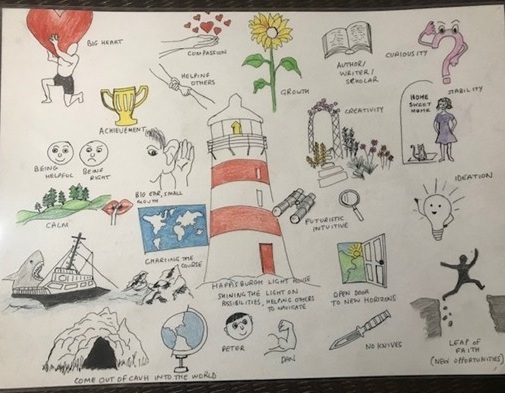
Paul’s Leadership Compass