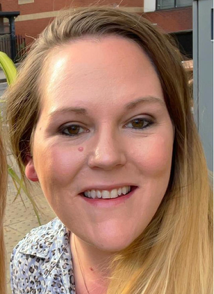
Harriet Hague,
Head of Category, Commercial Team
“By creating some thinking time and space for feedback, the engagement across the team was really high and we had some fantastic suggestions as to small steps towards better.”
Creating a truly engaged team isn’t just about good intentions, it’s about designing conversations where every voice can be heard. As part of embedding the learning from the Personal Leadership Programme (PLP), we introduced the What’s Working Grid (WWG) into our monthly team meetings. The impact has been more meaningful, empowering, and collaborative than I had anticipated.
Why the WWG? A Challenge Noticed
I’d begun to notice a pattern in our team meetings: the same voices, the same perspectives, and the same individuals leading most discussions. Valuable contributions were being lost simply because not everyone felt comfortable speaking up in an open forum.
To shift this dynamic, and to put PLP learning into practice, I introduced a structured discussion element to our monthly meetings, grounded in the WWG. The starting point was simple yet powerful: we focused on areas the team had flagged through our twice-yearly survey as “not always working as well as they could be”.
From that feedback, we created five key topics:
- Communication
- Sharing best practice
- Prioritisation
- Learning & development
- Roles & responsibilities
Working in groups of five, every team member contributed. We gave people independent thinking time, followed by structured small-group discussion, before sharing back with the full team.
How the WWG Shifted the Conversation
The WWG introduced a new quality to our conversations. Instead of diving straight into problem-solving, or worse, problem-listing, the tool encouraged balanced thinking. Each group explored:
- What’s working well
- What’s not working
- Ideas to get unstuck
- Small steps already in our gift to take
This structure kept discussions grounded, constructive, and forward focused. People weren’t just offering critiques; they were identifying practical steps we could take immediately.
The result being Higher engagement, richer ideas, and far more voices being heard. Some of the most insightful suggestions came from colleagues who rarely speak up in larger group settings.
What I Learned as a Leader
Using the WWG reinforced something essential: if we want to hear more diverse perspectives, we have to intentionally design conversations that invite them.
This experience highlighted the importance of:
- Giving people protected thinking time
- Creating smaller, safer discussion groups
- Using models to shape balanced, psychologically safe dialogue
- Actively seeking the full “beach ball” of perspectives rather than defaulting to the loudest voices
The PLP gave me the tools but applying them through the WWG brought those tools to life.
Wider Impact on the Team
The team’s initial reaction was a mix of curiosity and confusion; many hadn’t used the WWG before. I asked them to trust the process, and by guiding their thinking through the four boxes, something shifted.
By the end of the session:
- We had gathered richer insight, faster, than we ever had before
- Everyone felt involved, not just the usual contributors
- The team saw clearly that improvement is in everyone’s gift, not just something for leaders to fix
- A genuine sense of collaboration emerged
Once we consolidated the feedback after the meeting, we were able to share simple, immediate steps the whole team could take to improve how we work together.
Looking Ahead
I’m genuinely excited about what comes next. With my direct team starting their own PLP cohorts in early 2026, we’re already planning how to embed new ways of thinking, drawing on tools such as Transactional Analysis, Push–Pull, and other models.
The WWG has proven to be more than a template; it’s become a catalyst for inclusive dialogue, shared responsibility, and stronger team culture. And this is only the beginning.